




Other Electronics Accessories

Sold by
RUMARSEL ONLINE STORE
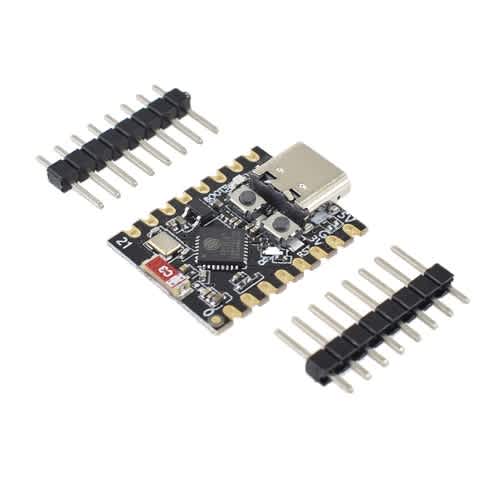
ESP32-C3 Super Mini WiFi & Bluetooth Development Board
Call us for Bulk Purchases
07080635700Product Description
See morePackage Includes:
- 1 X ESP32-C3 Super Mini WiFi & Bluetooth Development Board
| Weight | 0.20 kg |
ESP32-C3 Super Mini WiFi & Bluetooth Development Board is a compact development board based on the Espressif ESP32-C3 chip, part of the ESP32 family. Its main advantages over other ESP32 boards are its small size and low power consumption in deep sleep mode. In this guide, we’ll introduce the ESP32-C3 Super Mini, explore its features and pinout, show you how to program it using the Arduino IDE, and run a few examples to test the board. It features the ESP32-C3 chip with built-in Wi-Fi and Bluetooth. Unlike other ESP32 board models, this one is a single-core chip. It has a very small footprint and is optimized for low power consumption, drawing only around 43µA in deep sleep mode, according to the datasheet. The board has 16 pins, with 11 programmable GPIOs that support ADC, PWM, UART, I2C, and SPI.
It includes both RST (reset) and BOOT buttons. The BOOT button is used to put the board into bootloader mode for uploading code, while the RST button resets the board—useful for restarting and running newly uploaded code. The board also features a USB Type-C interface, which can be used for powering the board, uploading code, or serial communication. Alternatively, you can power the board using an external 5V source through the 5V and GND pins—but note that the USB-C port shouldn’t be used at the same time as an external power source. Like many other ESP32 board models, it comes with an onboard LED. But, in this case, it’s connected to GPIO 8 (instead of GPIO 2 in most boards)
ESP32-C3 Super Mini Technical Specifications:
Processor: 32-bit RISC-V CPU running up to 160 MHz
IEEE 802.11b /g/n WiFi and Bluetooth 5 (LE) protocols
400KB SRAM, 384KB ROM and built-in 4M flash
Compact SMD antenna
11 GPIOs that support the following interfaces:
4 ADC pins
PWM
UART
I2C
SPI
Onboard LED on GPIO 8
Reset and Boot buttons
Ultra low power consumption: as low as 43uA in deep sleep mode
Small form factor
ESP32-C3 Super Mini Peripheral Interface:
The ESP32-C3 Super Mini comes with 16 pins, 11 of which are programmable GPIOs that you can use to control peripherals and read sensors. It supports the following peripheral interfaces:
Digital I/O
PWM
ADC
PWM
UART
I2C
SPI
Strapping Pins
GPIO 2: a strapping to enter bootloader mode – avoid for general use.
GPIO 8: connected to the onboard blue LED (inverted logic/active LOW); it’s also a strapping pin;
GPIO 9: connected to the BOOT button – avoid for general use;
You can still use the strapping pins in your projects, however, you need to take into account the fluctuation of the state of these GPIOs when the ESP32 resets or enters into bootloader mode.
Power Pins
When it comes to power pins, you have one 5V, one 3V3, and a GND pin.
The 3V3 pin provides 3.3V from the onboard regulator or accepts 3.3V from an external power source. Similarly, the 5V pin, can be used for input to power the board, or it outputs 5V from the USB power supply.
PWM
All general-purpose GPIOs can output PWM signals.
Analog (ADC) Pins
GPIOs 0, 1, 2, 3, 4, and 5 support analog reading:
GPIO 0: ADC1_CH0
GPIO 1: ADC1_CH1
GPIO 2: ADC1_CH2
GPIO 3: ADC1_CH3
GPIO 4: ADC1_CH4
GPIO 5: ADC1_CH5
UART, I2C, and PWM
Due to the ESP32 multiplexing feature, the UART, SPI, and I2C interfaces can be assigned to nearly any GPIO.
However, when using Arduino IDE, and assuming you’re selecting the ESP32 C3 board in the Boards menu, it will assume the following pins as defaults:
UART: defaults to GPIO 20 (RX) and GPIO21 (TX)
SPI: defaults to GPIO6 (MISO), GPIO7 (MOSI), GPIO10 (SCK), and GPIO 5 (SS)
I2C: defaults to GPIO 8 (SDA) and GPIO 9 (SCL)
Warranty
Warranty information unavailable for this item.
Customer Feedback
No reviews yet
Be the first to review this product
Delivery & Returns
Delivery
Estimated delivery time 1-9 business days
Express Delivery available for KongaNow products only
Same day delivery: Order before 3PM and get it today (Sunday excluded).
Next day delivery: Order after 3PM and get it tomorrow.
Note: Subject to availability in your area.
Return Policy
Guaranteed 7-Day Return Policy
For details about return shipping options, please visit - Konga Return Policy
Warranty
Warranty information unavailable for this item.
Seller Information
View StoreRUMARSEL ONLINE STORE
7 Years of selling on Konga
Number of Sales
16.38K
Merchant Reviews (325)
ESP32-C3 Super Mini WiFi & Bluetooth Development Board
Sold by
RUMARSEL ONLINE STORE
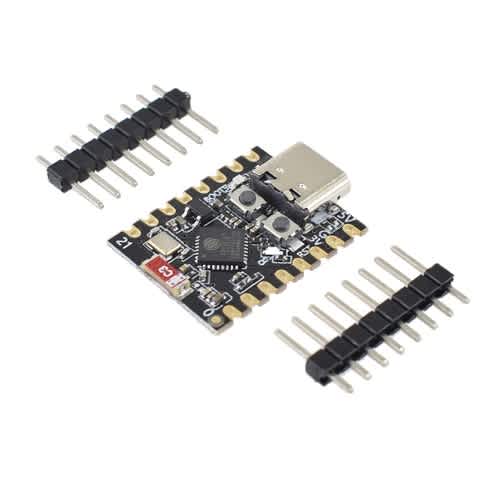
ESP32-C3 Super Mini WiFi & Bluetooth Development Board
Call us for Bulk Purchases
07080635700Product Description
See morePackage Includes:
- 1 X ESP32-C3 Super Mini WiFi & Bluetooth Development Board
| Weight | 0.20 kg |
ESP32-C3 Super Mini WiFi & Bluetooth Development Board is a compact development board based on the Espressif ESP32-C3 chip, part of the ESP32 family. Its main advantages over other ESP32 boards are its small size and low power consumption in deep sleep mode. In this guide, we’ll introduce the ESP32-C3 Super Mini, explore its features and pinout, show you how to program it using the Arduino IDE, and run a few examples to test the board. It features the ESP32-C3 chip with built-in Wi-Fi and Bluetooth. Unlike other ESP32 board models, this one is a single-core chip. It has a very small footprint and is optimized for low power consumption, drawing only around 43µA in deep sleep mode, according to the datasheet. The board has 16 pins, with 11 programmable GPIOs that support ADC, PWM, UART, I2C, and SPI.
It includes both RST (reset) and BOOT buttons. The BOOT button is used to put the board into bootloader mode for uploading code, while the RST button resets the board—useful for restarting and running newly uploaded code. The board also features a USB Type-C interface, which can be used for powering the board, uploading code, or serial communication. Alternatively, you can power the board using an external 5V source through the 5V and GND pins—but note that the USB-C port shouldn’t be used at the same time as an external power source. Like many other ESP32 board models, it comes with an onboard LED. But, in this case, it’s connected to GPIO 8 (instead of GPIO 2 in most boards)
ESP32-C3 Super Mini Technical Specifications:
Processor: 32-bit RISC-V CPU running up to 160 MHz
IEEE 802.11b /g/n WiFi and Bluetooth 5 (LE) protocols
400KB SRAM, 384KB ROM and built-in 4M flash
Compact SMD antenna
11 GPIOs that support the following interfaces:
4 ADC pins
PWM
UART
I2C
SPI
Onboard LED on GPIO 8
Reset and Boot buttons
Ultra low power consumption: as low as 43uA in deep sleep mode
Small form factor
ESP32-C3 Super Mini Peripheral Interface:
The ESP32-C3 Super Mini comes with 16 pins, 11 of which are programmable GPIOs that you can use to control peripherals and read sensors. It supports the following peripheral interfaces:
Digital I/O
PWM
ADC
PWM
UART
I2C
SPI
Strapping Pins
GPIO 2: a strapping to enter bootloader mode – avoid for general use.
GPIO 8: connected to the onboard blue LED (inverted logic/active LOW); it’s also a strapping pin;
GPIO 9: connected to the BOOT button – avoid for general use;
You can still use the strapping pins in your projects, however, you need to take into account the fluctuation of the state of these GPIOs when the ESP32 resets or enters into bootloader mode.
Power Pins
When it comes to power pins, you have one 5V, one 3V3, and a GND pin.
The 3V3 pin provides 3.3V from the onboard regulator or accepts 3.3V from an external power source. Similarly, the 5V pin, can be used for input to power the board, or it outputs 5V from the USB power supply.
PWM
All general-purpose GPIOs can output PWM signals.
Analog (ADC) Pins
GPIOs 0, 1, 2, 3, 4, and 5 support analog reading:
GPIO 0: ADC1_CH0
GPIO 1: ADC1_CH1
GPIO 2: ADC1_CH2
GPIO 3: ADC1_CH3
GPIO 4: ADC1_CH4
GPIO 5: ADC1_CH5
UART, I2C, and PWM
Due to the ESP32 multiplexing feature, the UART, SPI, and I2C interfaces can be assigned to nearly any GPIO.
However, when using Arduino IDE, and assuming you’re selecting the ESP32 C3 board in the Boards menu, it will assume the following pins as defaults:
UART: defaults to GPIO 20 (RX) and GPIO21 (TX)
SPI: defaults to GPIO6 (MISO), GPIO7 (MOSI), GPIO10 (SCK), and GPIO 5 (SS)
I2C: defaults to GPIO 8 (SDA) and GPIO 9 (SCL)
Warranty
Warranty information unavailable for this item.
Delivery & Returns
Delivery
Estimated delivery time 1-9 business days
Express Delivery available for KongaNow products only
Same day delivery: Order before 3PM and get it today (Sunday excluded).
Next day delivery: Order after 3PM and get it tomorrow.
Note: Subject to availability in your area.
Return Policy
Guaranteed 7-Day Return Policy
For details about return shipping options, please visit - Konga Return Policy
Warranty
Warranty information unavailable for this item.
Customer Feedback
No reviews yet
Be the first to review this product